Video Game Blog 059: Dragon Ball Marathon Part 3
And we’re back for the next installment of my Dragon Ball fighting game coverage! So far we’ve talked about all three Dragon Ball Z: Budokai games. If you missed those posts, they’re here:
Video Game Blog 049: Dragon Ball Marathon Part 1
Video Game Blog 053: Dragon Ball Marathon Part 2
And now we’re back to talk about the follow up series, Dragon Ball Z: Budokai Tenkaichi. As I talked about in my previous posts, I love this franchise, and these games are what got me into the fighting genre. The Tenkaichi series is not my favorite, but I did have some fun with the ones I’ve played. For future reference, prior to this post I had fully completed Part 1 and hadn’t finished Part 2. (Also, I forgot how far along I was in it and started over without checking. My notes later revealed to me I was over halfway done. Oops.) This is why there was such a gap between this post and the one prior to it… I had to play all the way through Tenkaichi Part 2 for this.
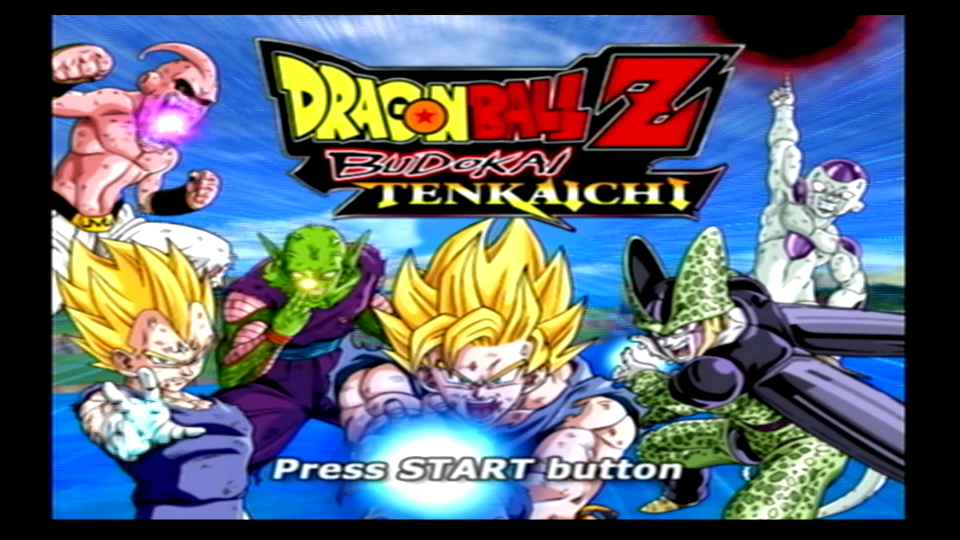
Title (Credit: Akira Toriyama, Spike)
Dragon Ball Z: Budokai Tenkaichi was released in 2005 for the PlayStation 2 and was developed by Spike. This game may have Budokai in the title, but it’s not part of that original series. This starts its own series of games with a fully revamped game engine and new mechanics.
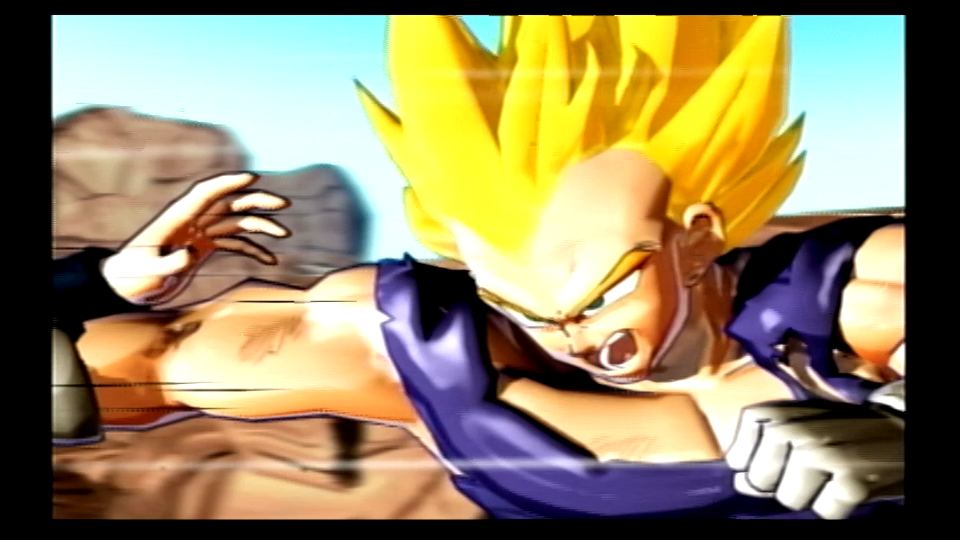
3D fightin’. (Credit: Akira Toriyama, Spike)
The opening movie is a slightly dated, but kind of awesome sequence rendered in 3D of the characters and some of the most iconic fights. It culminates with Goku defeating Kid Buu and getting blindsided by a battle-hungry Vegeta. They start sparring and there are some weirdly horny vibes going on as they smirk at each other, nodding their heads suggestively.
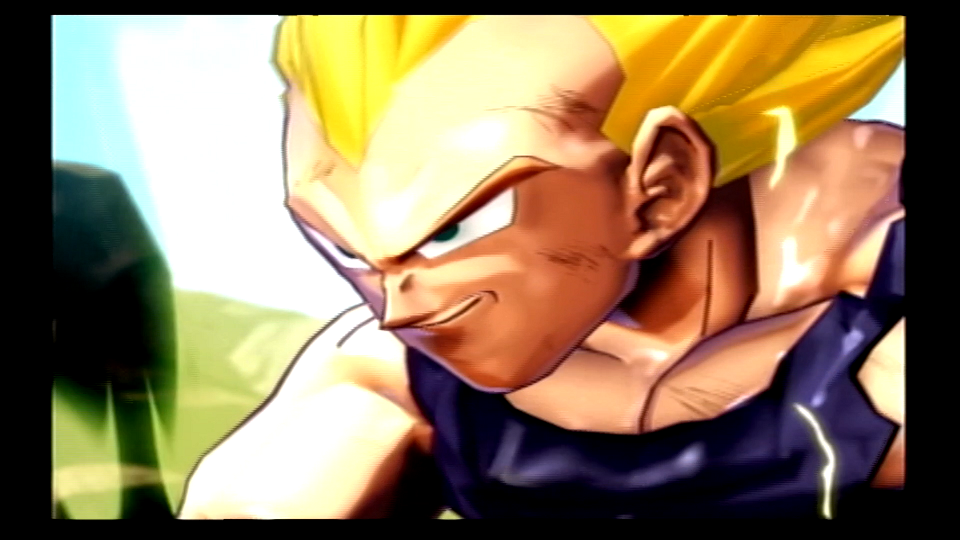
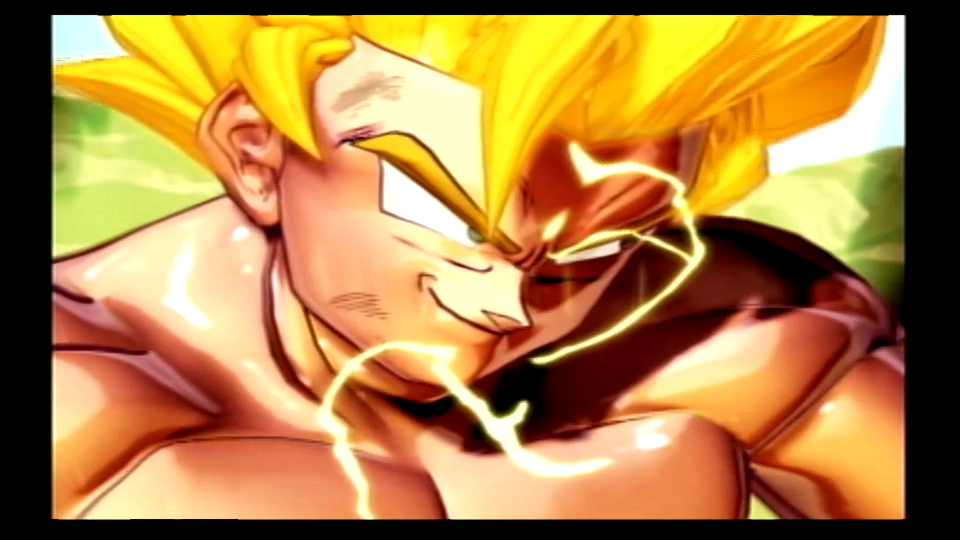
Uh… yeah. (Credit: Akira Toriyama, Spike)
Sorry, just had to mention that because it always makes me laugh.
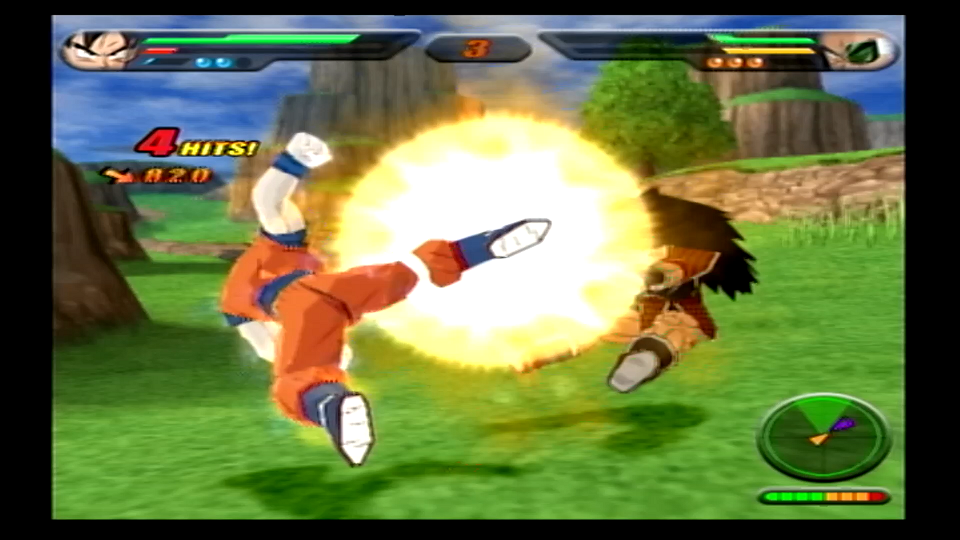
WHACK. (Credit: Akira Toriyama, Spike)
The gameplay in this game is completely different from the Budokai series. They go from a 2.5D perspective to a behind-the-back 3D camera. Every battle is completely free roam with a lock-on system. When you approach your opponent, you click to them like a magnet to allow for easier fighting. When you leave this approach area, you can float or fly freely around the stage. Much of the environment can be destroyed. You can even hide from your opponent if you choose to. You can locate your opponent using something called Z-Search. You can teleport around, jump, guard, and taunt. (Although I didn’t use those last two that much.)
There are no longer punch and kick buttons, just one attack button that alternates between punching and kicking as you combo. Connecting with blows builds the Smash Gauge, which allows you to hit your opponent harder, breaking through their defenses and throwing them back. You can do a Smash Dash, which allows you to then chase your opponent, continuing the attack in a chain.
There is a secondary blue bar that continually raises as you battle. This is the Favorite Gauge. Once full, it gives you one stock, which you can spend on Favorite moves. Rather than a series of button presses like the previous games, Favorite Moves, Finishing Moves, and Ultimate Moves are done with simultaneous combinations of buttons.
Without getting too technical in the game mechanics, the various moves are performed with combinations of the four main controller buttons, the four shoulder buttons, and the direction pad/analog stick. (For example: L2 + Triangle + Up.) The most challenging part of this game for me was remembering which button and which combination of buttons did what. Rather than making the combos easier to pull off by reducing the amount of inputs, it just made it more confusing for me.
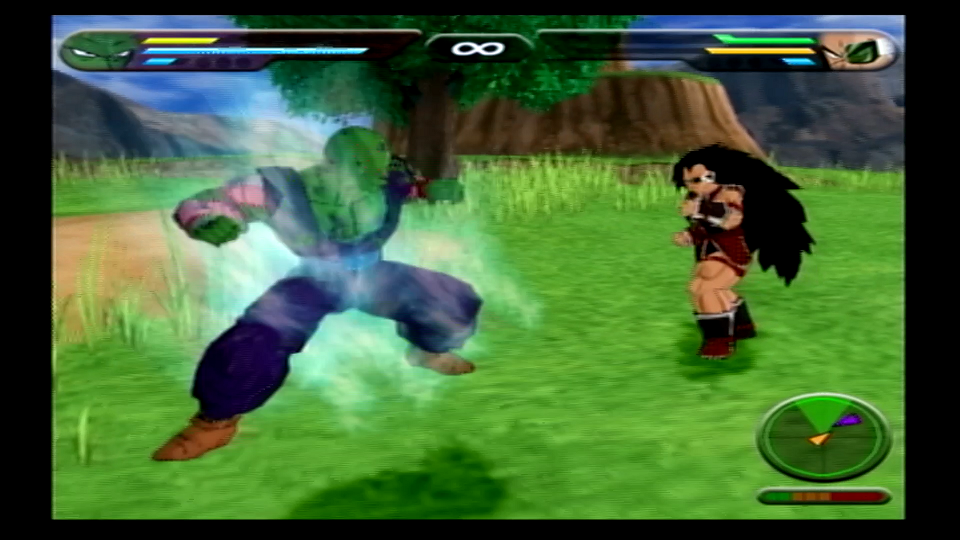
MAX POWER! (Credit: Akira Toriyama, Spike)
Dragon Dash is high speed flight that allows you to evade, pursue, or crash through the environment. You can use this in all directions, even up or down.
Shoot Out is when you hit each other with a dash or blast move. You have to rotate the analog stick repeatedly and whoever rotates it the most wins the struggle and inflicts massive damage.
New to this series is MAX POWER! Mode, which is attained by charging your Ki all the way to the top and expending a Favorite stock. Once in MAX POWER! Mode, your character is stronger and faster and can pull off their Ultimate Moves. The gauge continuously goes down over time. After a few attacks, this mode ends.
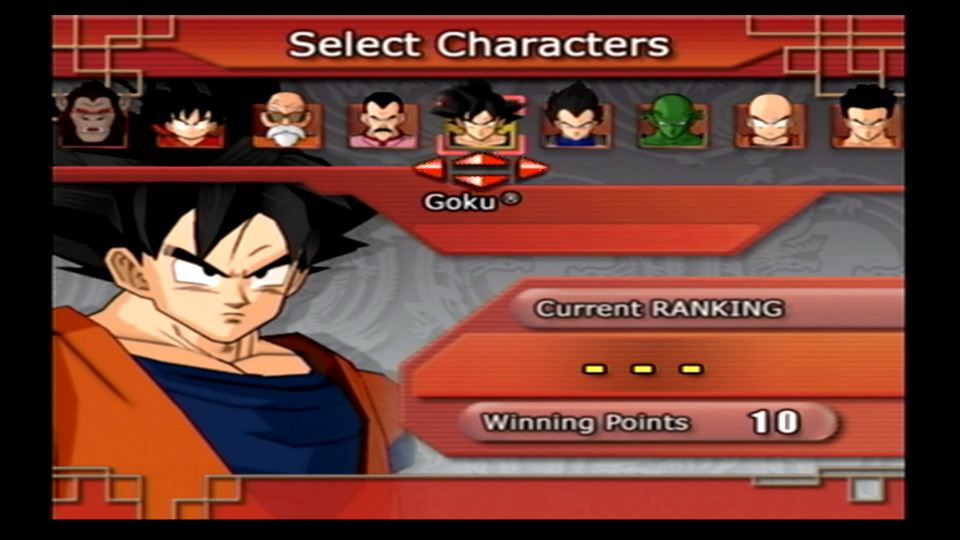
Characters. (Credit: Akira Toriyama, Spike)
A major change in this game is in the characters. The character roster has expanded to 64 characters. (Nearly double the previous game I covered!) The reason for this is that now the transformations are presented as their own characters rather than being equipped. (You actually cannot transform in battle in this one.) So, for example, there are five versions of adult Goku including all the Super Saiyan forms… there is no Kaioken transformation this time. (It is a move you can perform, though, which is more fitting with the series. It was never really a transformation in the anime and manga but the previous games had it as its own transformation.) The fusions also get their own characters, but Gogeta only appears as SSJ and SSJ4, not his normal form.
All of Freiza’s forms appear as characters, including Metal Freiza. Cooler only appears in his final form, strangely enough. Super Buu gets his normal form, Gotenks Absorbed, and Gohan Absorbed. There is also the Pure Evil Buu. Broly only appears in his Legendary Super Saiyan form.
New characters are Chiaotzu (finally!). Burter, Jeice, and Guldo from the Ginyu Force. Bojack and Jenemba appear from the movies. Baby Vegeta and Super 17 appear from GT. General Tao and Master Roshi appear from the original Dragon Ball. (I was very happy to see the Turtle Hermit in the roster!) A big addition to the characters— pun intended— is the Great Apes, playable for the first time. There are only two, though, a generic Great Ape (which could be Goku or Gohan before they lost their tails.) and Great Ape Vegeta in his battle armor. There is also a new version of Trunks after training with Vegeta. Characters that did not carry over to this game are Omega Shenron, Supreme Kai, and Uub. (And, as mentioned before, the normal forms of Cooler, Gogeta, and Broly.)
There are ten stages you can battle on in this game.
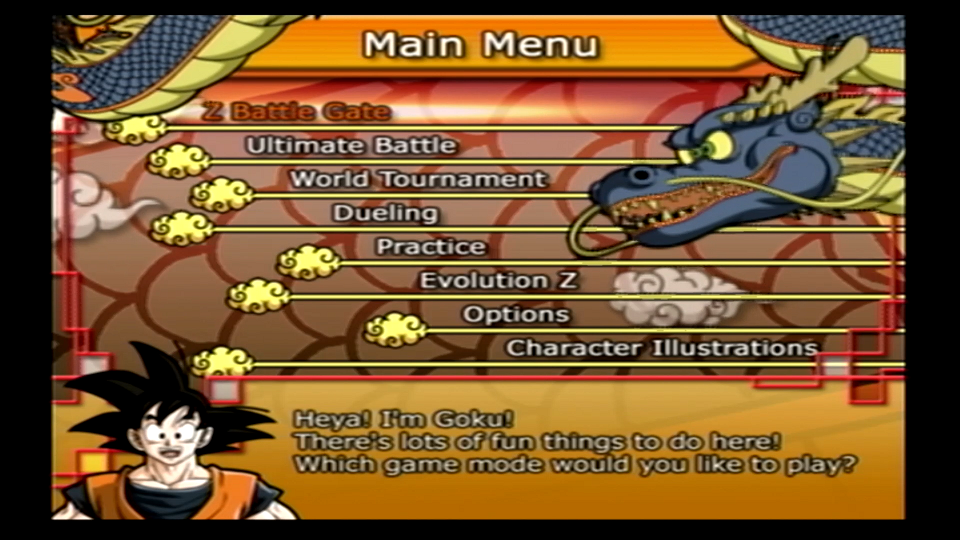
The main menu. (Credit: Akira Toriyama, Spike)
The game modes are pretty standard. There’s the usual Dueling and Practice modes. (The latter of which has an extensive tutorial.) The Character Illustrations option shows bios for all the characters.
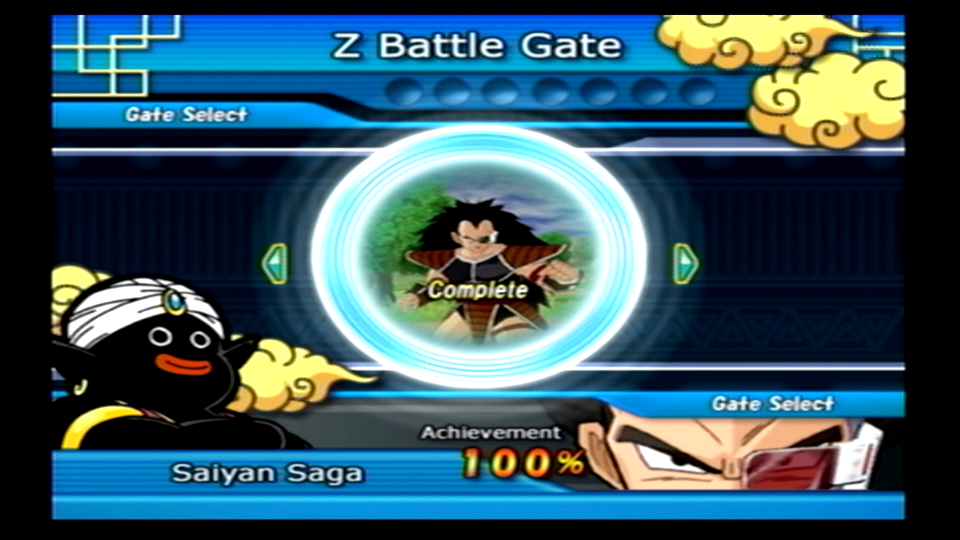
The new story mode. (Credit: Akira Toriyama, Spike)
The story mode in this game is called Z Battle Gate. In this mode you go through the major sagas of Dragon Ball Z, the OVAs, some movie content, and selected portions of Dragon Ball GT. There are also What If scenarios where you battle as the villains. The final, unlockable scenario covers Goku as a child, battling it out at a fictional Budokai where he faces his opponents from the original Dragon Ball series, including Tien, Piccolo, and General Tao.
There are 18 scenarios in all. This is a very lengthy portion of the game. Some of the scenarios have 20-30 battles, some just have one. The fighters and opponents vary, following very closely with the match ups from the source material.
There are three types of battles in this mode. The standard “defeat your enemy” objective, defeating your opponent with a specific move, and the “survive for X seconds” objective. That’s right, some of the battles are not meant to be won. You instead have to evade your opponent, fight them off when you have to, and wait out the clock.
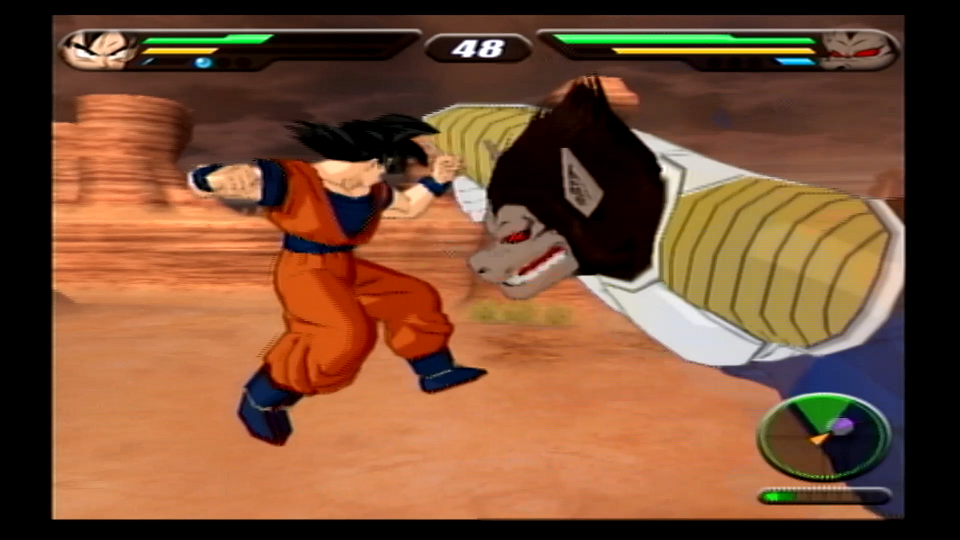
Oh great, now he’s a monkey. (Credit: Akira Toriyama, Spike)
While the movie and GT content is very slim, the What If scenarios are much more interesting to me. In these, you follow things that conceivably could have happened, had the story gone down a different path, just like the extra chapters in Budokai Part 1’s story mode. In these, you follow what would have happened if the Saiyans had revolted against Freiza, if Freiza had defeated Goku and gone after his brother Cooler, if Cell had won the Cell Games and gone after Super 17, and if Majin Buu had defeated all the heroes and battled Janemba. In the last What If scenario, some of the villains team up to defeat Earth’s defenders.
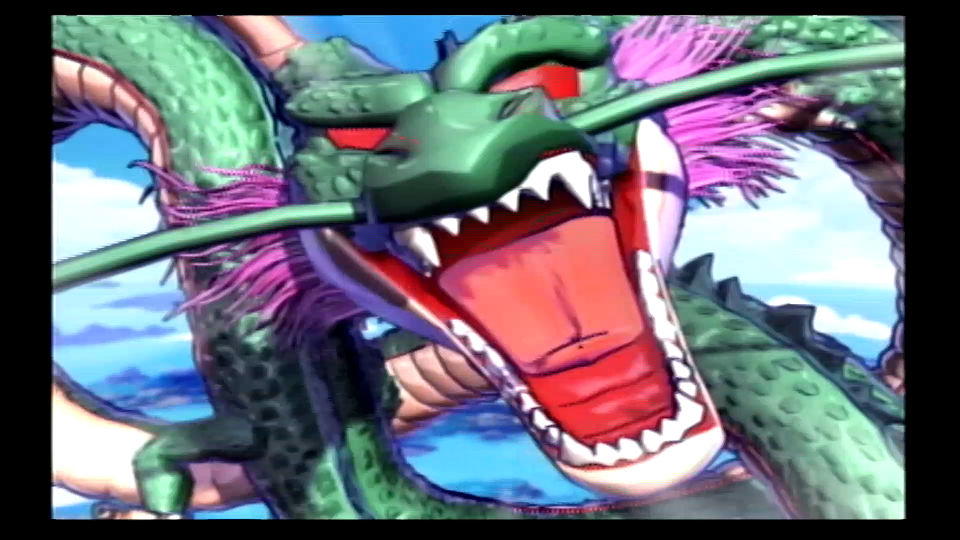
Rawr. (Credit: Akira Toriyama, Spike)
As always, one of the main reasons to play through story mode repeatedly is to gather all the Dragon Balls. After destroying the environment and picking up the Dragon Ball, you have to win the battle to keep it. In this game you can wish for the Password mode, the final scenario of the Z Battle Gate, and five of the characters.
The Password option allows you to enter passwords to import your custom characters from Budokai 3. You can’t use the characters that don’t appear in this game, of course, and the imported characters are modified to fit into the stats for this game. Also, if you have a certain level of transformation equipped before the password is generated, that’s the character you get in this game. For instance, if you have the capsules up to SSJ2 Goku in Budokai 3, you generate a Super Saiyan 2 Goku in this game. I didn’t use this mode at all, but I found it interesting that they included it considering the Budokai series was made by different developers.
After you have wished for everything you can in this game, the Dragon Balls no longer appear.
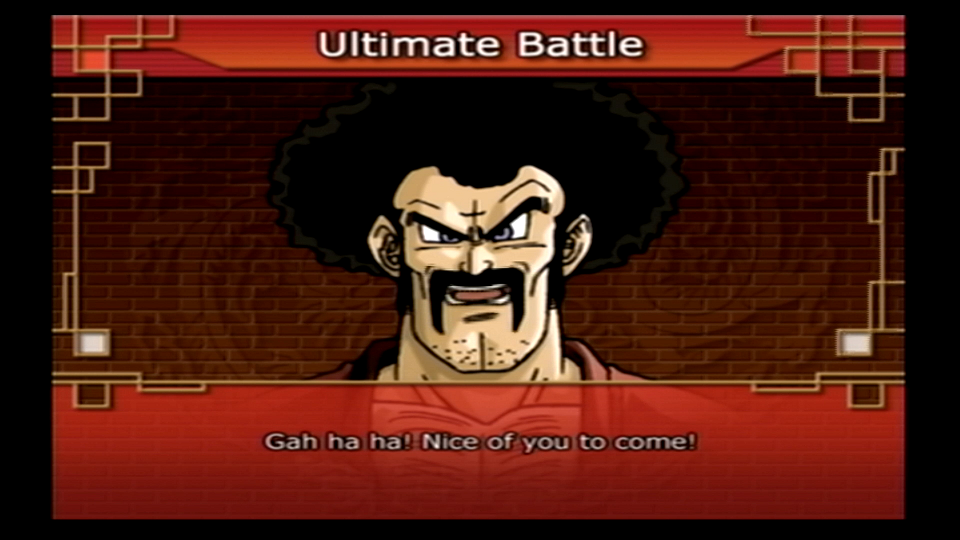
One of my favorite characters! (Credit: Akira Toriyama, Spike)
Ultimate Battle is a lot like Dragon Arena in Budokai 3, but there is nothing to really unlock here. This is a ranked mode where you battle against 100 opponents. (Many of them more than once at increasing difficulty.) Winning the battle gets you a point and losing loses you 2 points. At higher difficulties, your health is not restored after each battle.
Oh, one last note. The ranking goes from 100 to the best fighter at rank 1. Fighter number 100 is Hercule, of course, and he doesn’t reappear later in the mode. Hehe.
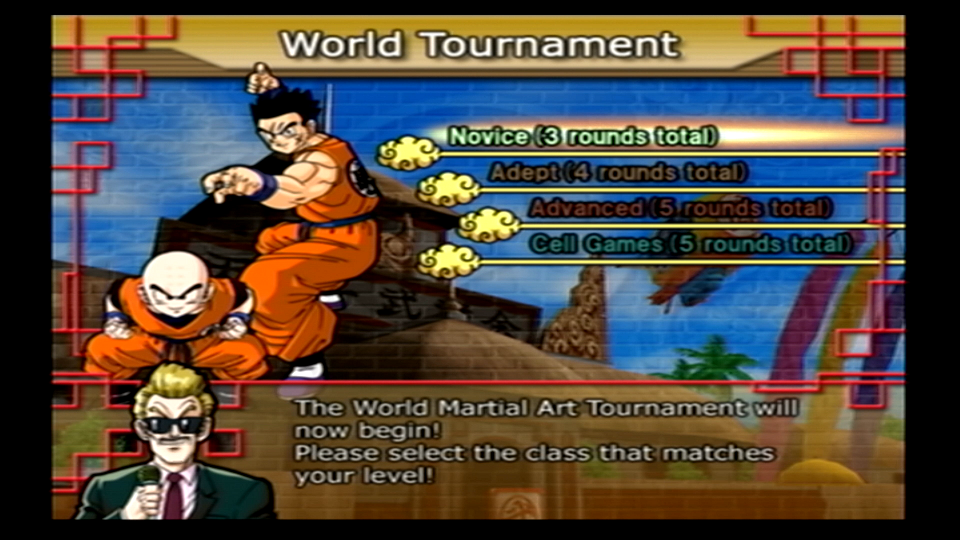
We all know the drill. (Credit: Akira Toriyama, Spike)
The next mode is the World Tournament and there is nothing much to say about this. It’s in all these games and it’s a standard bracketed tourney where you face opponents to earn prizes. The part you may not expect is that there is no prize money this time. That’s right, this game has no Zeni. You’re fighting for potara in this mode, which is what you use to customize your characters. (I’ll talk about that next.)
The only thing to really mention here is that you can freely fly during battles in this game, so you can fly over the bounds of the ring, but if you touch down on the ground, you ring yourself out. (That makes this mode extra difficult for me. I got so many self ring outs.) In Cell Games mode there is no ring out.
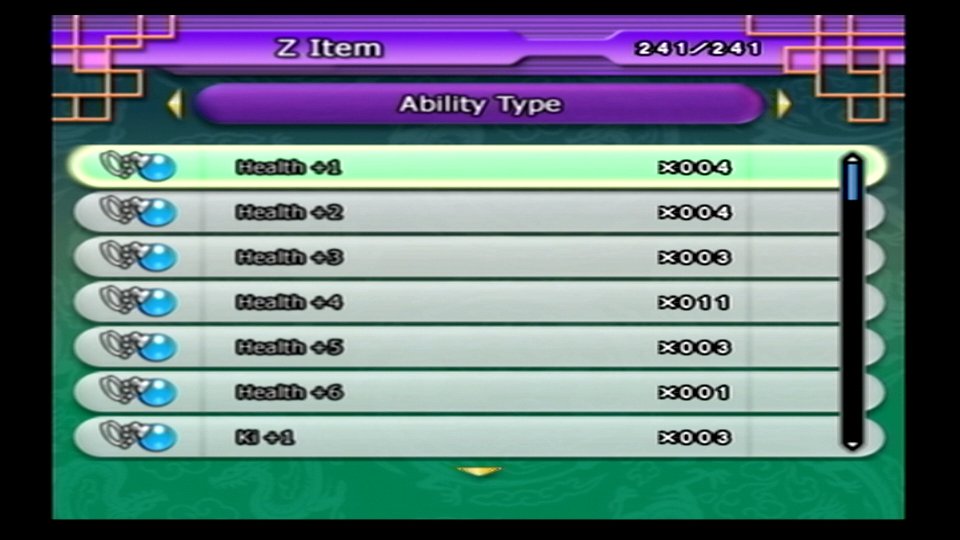
Potaras are the new capsules. (Credit: Akira Toriyama, Spike)
Evolution Z is how you customize your fighters. Since there is no Zeni in this game, there is no shop. There are also no capsules, like there were in the Budokai games. This one is all about the potara… which for those unversed in Dragon Ball, are magical earrings that the Kais wear. These were used in the series exclusively for fusion, but in this game, they’re used for raising your fighters stats and granting them abilities. You earn the potara in story mode and World Tournament.
The number in the corner indicates how many more potara you need to fill in the collection. The ones you don’t have are shown as dashes in the list itself and are filled in once obtained. There’s no percentage stat in this game to show you your completion, but this is how you keep track instead.
Most of the potara are flat stat increases, like Health, Attack, etc. One interesting feature is that you cannot automatically equip the max number of potara to each character. You have to increase the number of slots available by equipping a slot increase potara. There are also potara that give beneficial effects like raising attack, recovering Ki, extending MAX POWER! Mode, and many more.
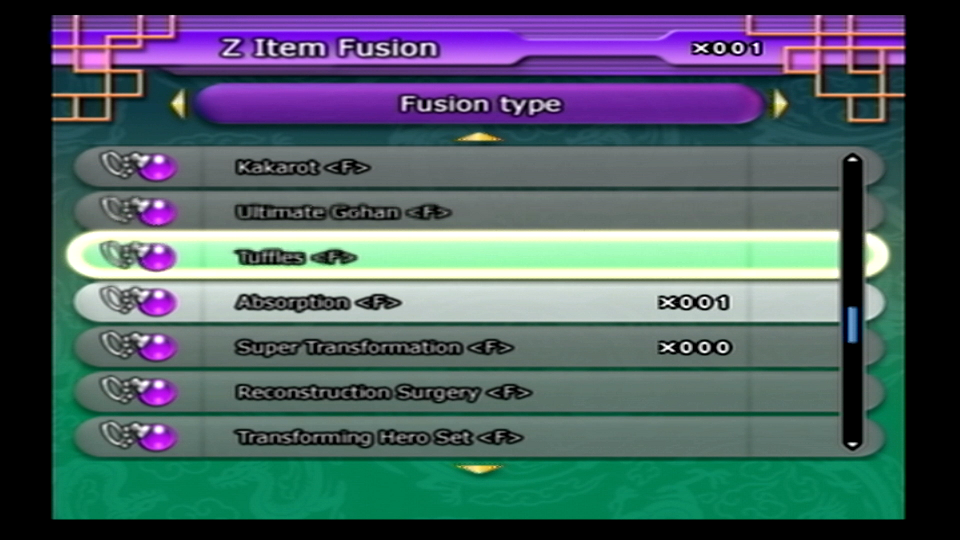
FU-SHUN! (Credit: Akira Toriyama, Spike)
Arguably the most important part of the game for those wanting to fully complete it, is the Z Item Fusion section. Using the purple potara obtained as rewards in Z Battle Gate, you can combine two potara to create new characters and items. You can also fuse the Ability potara, which is the only way to get the higher level stat increases. (Two Attack +3 fuse into an Attack +6, and so on.)
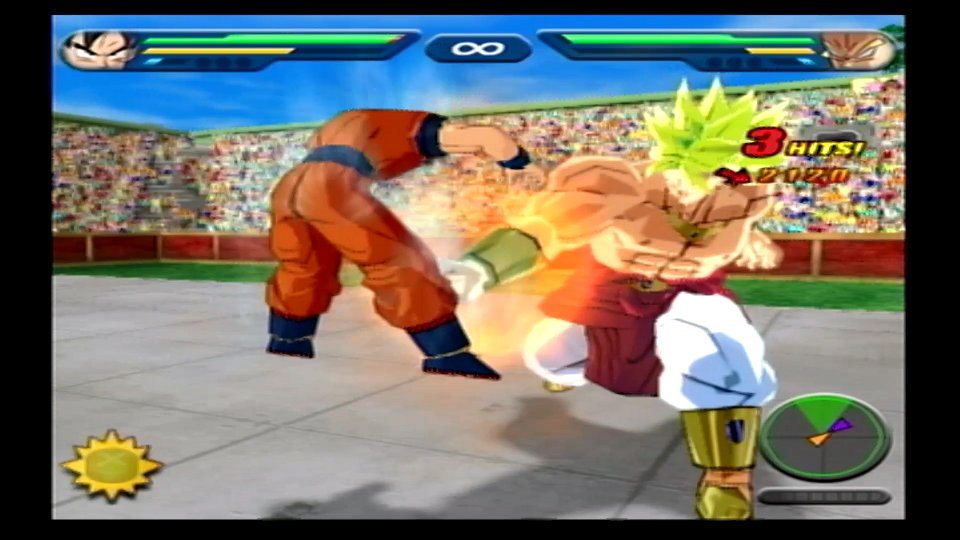
OOF. (Credit: Akira Toriyama, Spike)
Upsides: I do like that this game shook up the formula and tried new things. As mentioned before, the opening movie amused me. I liked the new characters they added, especially Roshi. Adding the Great Apes was an interesting choice. They’re hard to control, but fun to play. They tower over the other characters. Z Battle Gate was a great story mode and the What If scenarios were awesome. Also, I do like that they hide the Dragon Balls in the scenery of the battle itself. That adds an element of challenge, as you have to evade your opponents to find them all. Since you only have to wish for seven things this time, finding the Dragon Balls was much less of a grind than previous games. And although I didn’t use it, adding the Password feature was a good move, allowing people to bring in their fighters from Budokai 3.
Downsides: Ugh, where do I start? The controls are abysmal. I lost so many battles due to the weird lock-on mechanic or going out of bounds in the Tournament. While I like the idea of not being able to win every battle (having to survive until time runs out) it was difficult to play that way. It’s Dragon Ball— I want to destroy my opponents. I think the potara system was a bit more limiting than the capsule system from Budokai. But giving flat stat increases did help. I don’t like how difficult it was to figure out the potara fusions… it made it much harder to tell if I was getting everything. You shouldn’t need to use an FAQ and write out your own list to ensure you’ve completed a game. The game should tell you that! And, as mentioned earlier, the button combinations were confusing and difficult to get the hang of without a lot of practice.
Soap box time: The controls in this game are drastically different from the Budokai series. I had (and still have) a lot of trouble with them. There’s a steep learning curve and they’re not really intuitive. Every time I got distracted from this game or frustrated enough to take an extended break, I found myself having to read the manual and going through Tutorial mode again to relearn the combat system. (This time was no exception.) I can see what the developers were going for— a more immersive and option-rich engine on which to build the next phase of Dragon Ball games. But I don’t think they quite had it right with this one. Maybe it’s just personal preference, or maybe it’s the hundreds of hours I put into the three Budokai games, but this one never felt natural to me. Using two buttons and a direction should be much easier than a series of inputs, but it was hard to keep the combinations straight. (When do I use L1+Up+Circle and when do I use L2+Down+Triangle?)
I put hundreds of hours into the Budokai trilogy and binged them, playing them nonstop until I unlocked everything. Picking them up again all these years later for these posts felt like coming home and I didn’t have to look much up. In comparison, playing the first Tenkaichi game took me about 15 years, playing off and on, before I finally unlocked everything in the game. It’s fun in its own right, but I just preferred (and still do) the Budokai series. Again, that’s probably just personal preference, but I feel this game could have been much better.
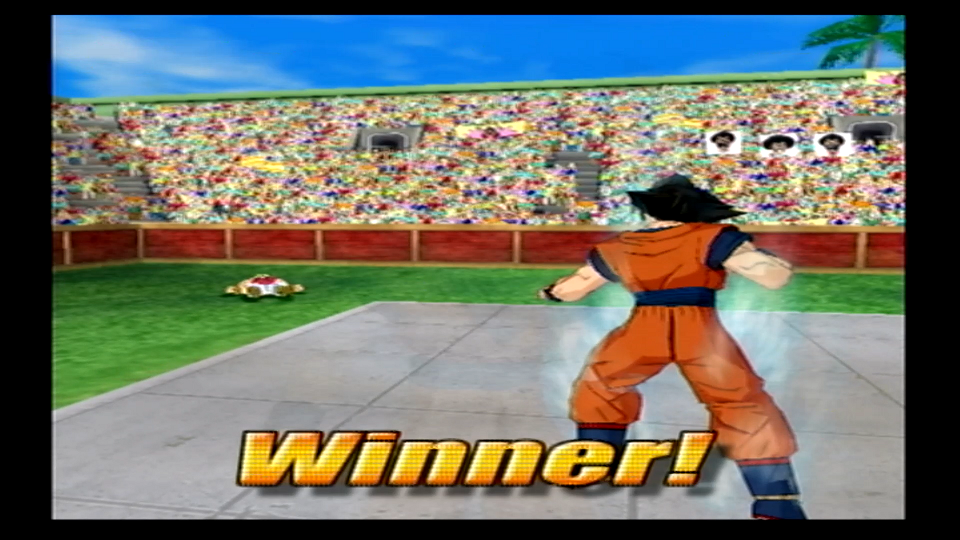
Ha. Take that. (Credit: Akira Toriyama, Spike)
So, considering everything, I give Budokai Tenkaichi a rating of 3 out of 7 Dragon Balls. They tried, they really did, and maybe I would have liked it more if I could stop comparing it to the Budokai series, but I really didn’t like this game due to that comparison. It had its good points, and I did enjoy it a bit more revisiting it for this post, but playing through this game originally to get everything was just painful. Story mode was fun, but the poor controls and confusing mechanics knocked this down several points in my rating. And for all the fun, the high difficulty of some of the battles (Great Ape Vegeta and Kid Buu especially) made for a frustrating play.
For how well it translated the spirit of the franchise, I think that’s where it kind of shined. Putting the action in full 3D with free roam was a good move and makes it feel more realistic when you chase or evade your opponents. Finding the Dragon Balls mid-fight was a cool addition. Although sometimes difficult to pull off, I appreciated the objectives to defeat your opponent with specific moves. (Ever try to hit a moving target with a Spirit Bomb? Don’t. It rarely connects.) Difficult or no, it added variation and made the fights more story-accurate. Not allowing you to win every battle and have to wait out the clock really matched with the spirit of the series as well… there were times in the anime and manga where they had to stall the enemy and wait for the stronger fighters to arrive or buy Goku time to power up his Spirit Bomb. (I used to call Dragon Ball Z “Waiting For Goku” because it kept coming down to everyone waiting for Goku to show up and save them.)
For completion, I got all of the potara, unlocked all the characters, cleared all the scenarios in Z Battle Gate, and left the game in my rear view mirror. I barely did anything on Ultimate Battle. In fact, I didn’t put much more than an hour into playing for this post since I really didn’t want to relearn everything from scratch. Plus, I was eager to get to the next one…
Title (Credit: Akira Toriyama, Spike)
Dragon Ball Z: Budokai Tenkaichi 2 was released in 2006 for the PlayStation 2 and the Nintendo Wii by Spike. I played the PS2 version for this post.
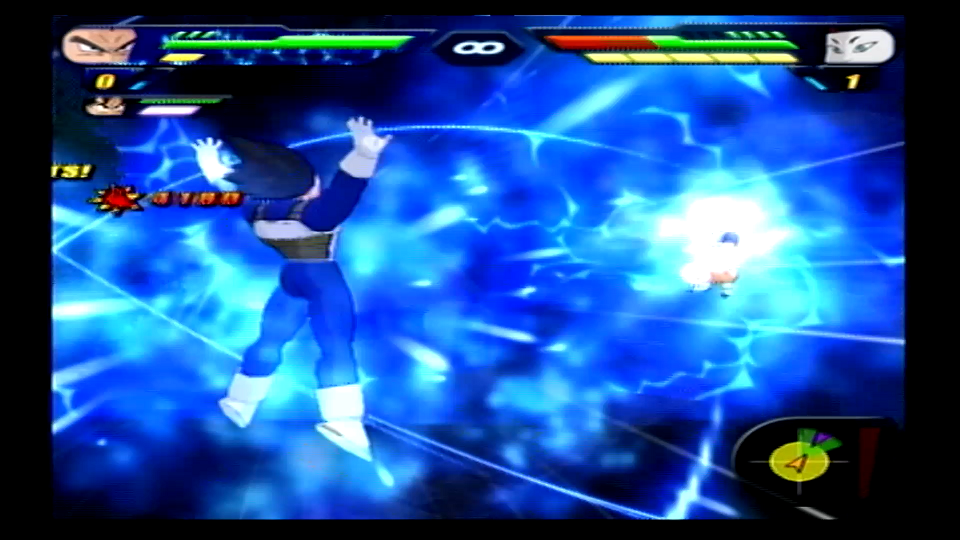
Vegeta is showing off. (Credit: Akira Toriyama, Spike)
There are some new mechanics in this game, building on those from the first installment. The favorite and finishing moves have been replaced with Blast 1 and Blast 2. Blast 1 are typically powerup or utility moves while Blast 2 are the stronger moves that do damage. They retained the Ultimate Moves but the favorite stocks are now blast stocks which are numbered instead of blue dots. They build up as time passes in the battle. You no longer build up a smash gauge by fighting… instead you hold in the attack button to guard break and throw your opponents back— the higher the gauge, the farther they fly.
The controls are a bit better on this one. (Plus I really took the time to learn them since I was playing from the beginning.) It builds off the control scheme of the first game but either I was finally accustomed to it, or they simplified it enough that I was able to get the hang of it. They added some more complexity to the combat as well. You can now use Ki in smash attacks. You can launch enemies into the sky and do aerial combos. You can also chase enemies down to continually attack them as they fly away. None of these really worked well for me and felt like superfluous options. They also allowed for guarding in five directions, but I still didn’t really use guard. (I’d probably be better at fighting games if I guarded, but whatever. I’m an offensive fighter.) It was easier to leave your opponent’s orbit, allowing for more travel around the stage.
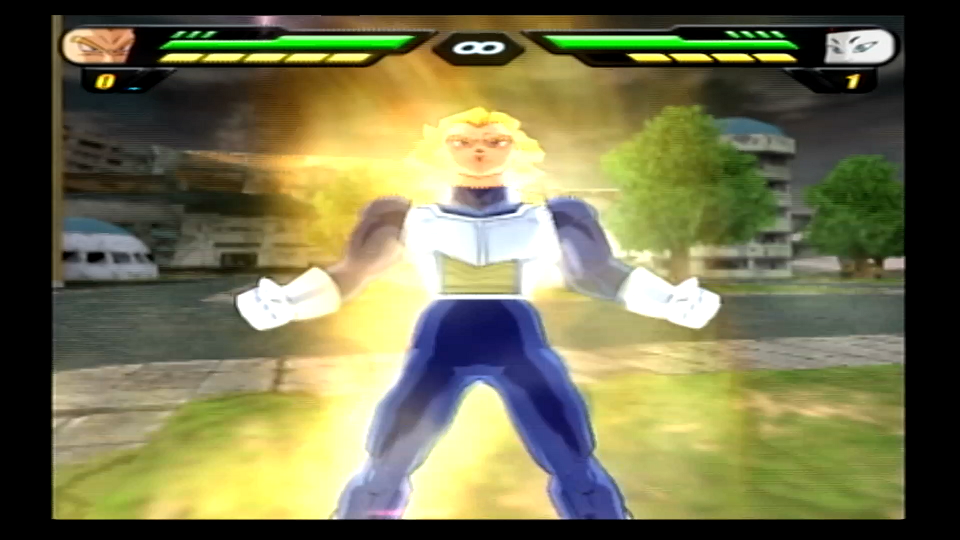
Transform! (Credit: Akira Toriyama, Spike)
My favorite part of this game as opposed to the first one is that in-battle transformations return! The transformations consume a blast stock each and change you to the next level up. They also do not sap your ki. (If you recall on the Budokai games after transforming, your ki would steadily decrease.) The transformations boost your stats and change your move set. Just like in the previous game, you can play as any of the transformations as your base character if you choose, since they’re all separate characters. But this one also allows you to play as the base character and move your way up the transformations during battle, which was my preference. You can also revert your transformations if you like, but some characters like Frieza and Cell cannot revert once transformed. Some of the transformations from the original series do not come back, like Gohan and Krillan’s Release Potential or Piccolo’s Fuse With Nail/Kami.
Similar to transformations is tag team. In some battles you can select multiple characters. The switch gauge fills up over time and when it’s full you can hit button combinations to switch to other characters.
The Blast 2 moves are those that use ki like Kamehameha and Masenko. These are the moves I used most often, sometimes just spamming between the two Blast 2 moves throughout the whole fight, charging ki as my opponent recovered. Cheap, but effective.
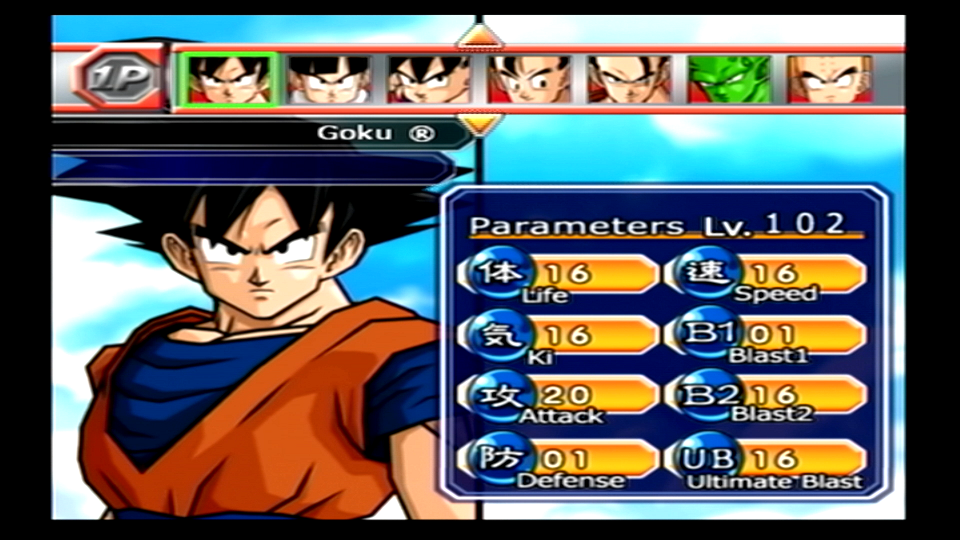
Character roster, (Credit: Akira Toriyama, Spike)
The character roster has grown to 100 characters with 136 forms. (The Wii version has 5 exclusive characters, all of which I believe come back in Tenkaichi Part 3.) All the characters from the previous Tenkaichi game reappear. The new characters are Great Saiyaman 2, Syn Shenron, Cui, Garlic Junior, Lord Slug, Salza, Android 13, Hirudegarn, Pikkon, Tapion, Zangya, Super 17, Yajirobe, Pan, and Grandpa Gohan.
Supreme Kai, Kibitoshin, Omega Shenron, normal Cooler, normal Broly, and Uub return from previous games. Uub gets a second form and Master Roshi gets his Max Power form where he becomes weirdly buff. Baby gets two new forms. Bardock, Nappa, and Raditz get Great Ape forms. And some of those mentioned earlier get transformations as well like Garlic Junior and Lord Slug.
There are 16 stages to play on. There is a lot of destructible items in the environment, which is where the Dragon Balls can be hidden, one per stage.
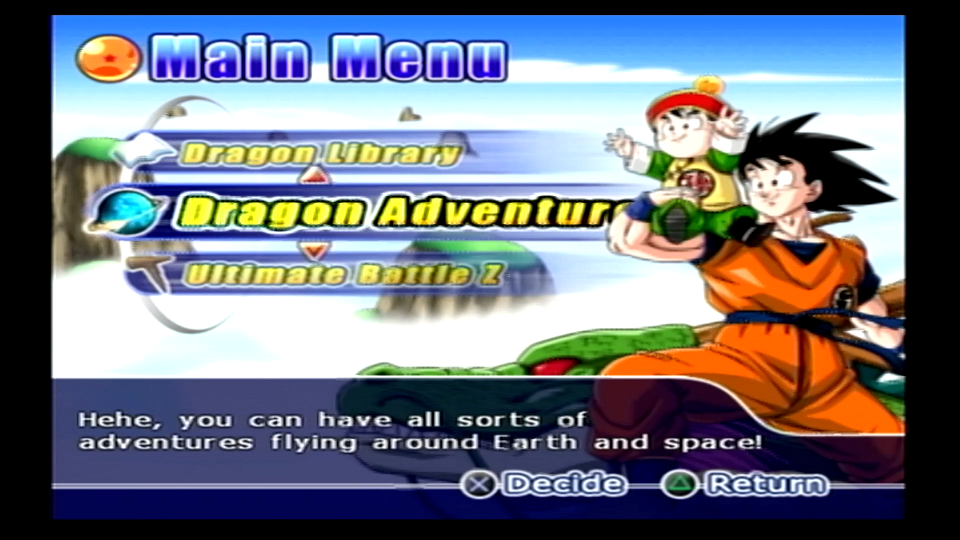
Main menu. (Credit: Akira Toriyama, Spike)
The main menu is set up in the usual way, with the various options you can scroll over.
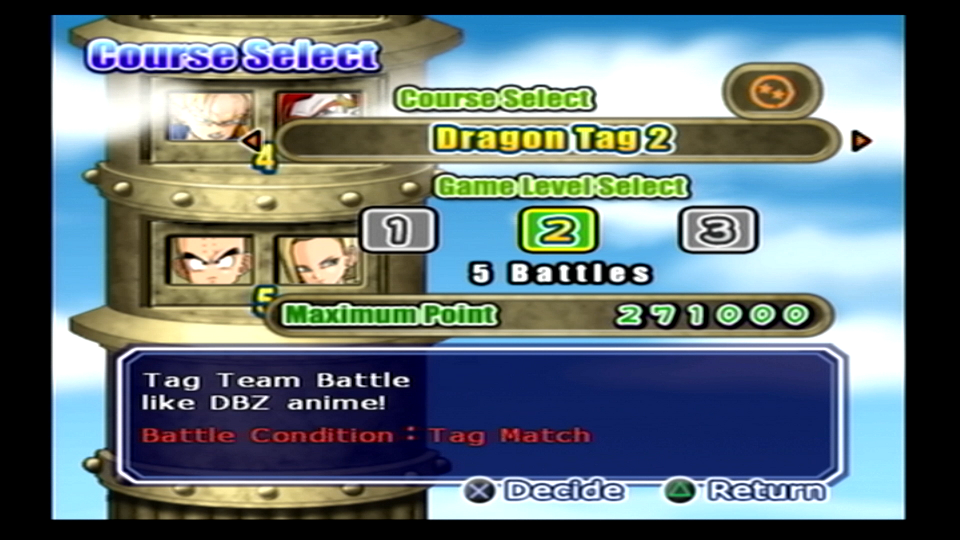
Ultimate Battle Z. (Credit: Akira Toriyama, Spike)
Ultimate Battle Z is the new version of the previous game’s Ultimate Battle mode. This one, rather than being a 100-fighter roster is arranged in towers where you fight multiple opponents. You unlock more towers as you go. You can choose difficulty from Level 1 to 3. The difficulty increases the stats of your opponents. (This works the same in story mode.) If you choose custom characters you gain EXP for the battles. (More on that later.)
This was a good place to level up my potaras, but there were way too many challenges. (Every time I thought I was done, I unlocked one or two more towers.) The final challenge seemed impossible at first, but once I maxed out Goku’s Attack, Speed, Defense, Blast 2, and Ki, I managed to beat it. My favorite fights in here were the two tag team battles and one challenge where you fought every member of the Ginyu force without resting.
Dueling is the usual two player mode where you can battle other human payers or CPU-controlled fighters.
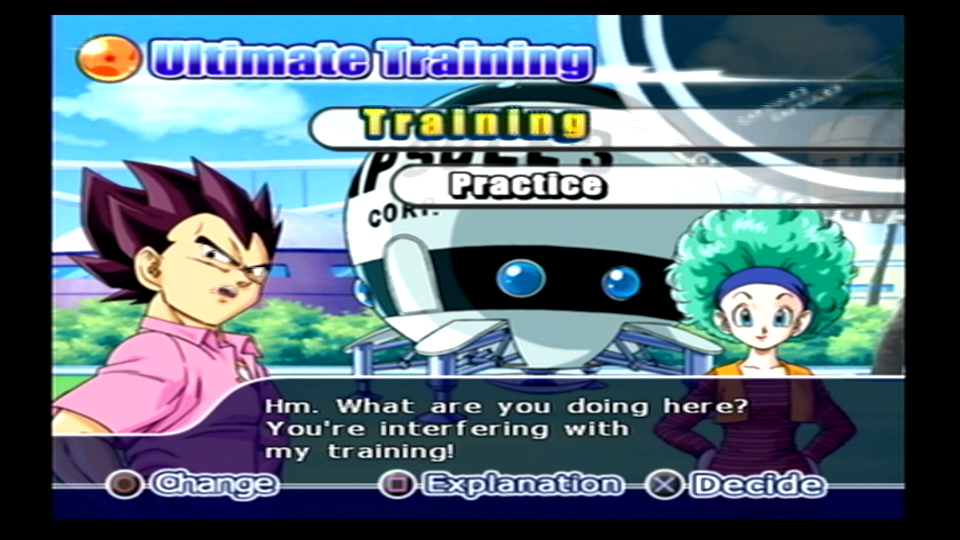
Training. (Credit: Akira Toriyama, Spike)
Ultimate Training is the tutorial mode and Practice mode. This one’s tutorial is narrated by Vegeta and Bulma (and then their daughter Bulla once you unlock that option.) It’s somewhat amusing, but written kind of lazily.
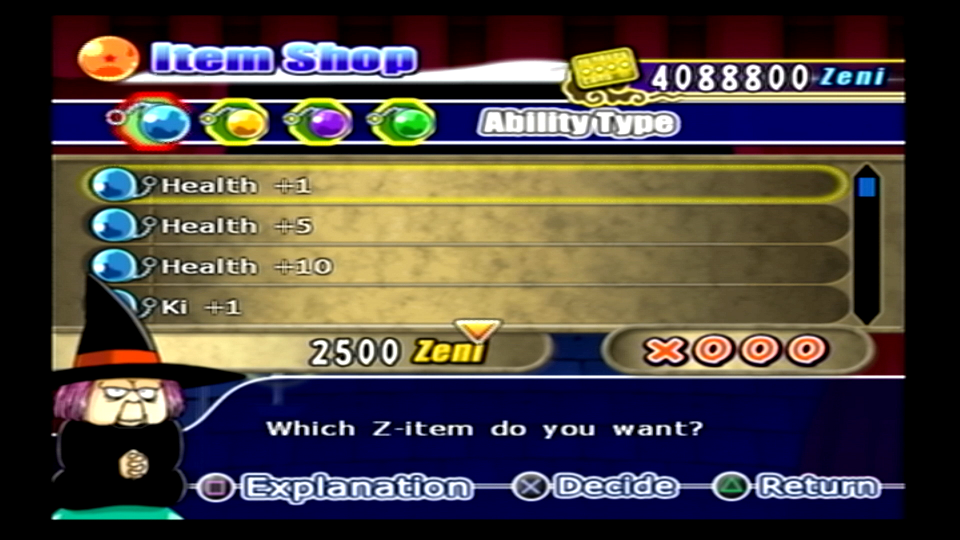
Baba opened a shop. (Credit: Akira Toriyama, Spike)
The Item Shop this time around is run by Fortune Teller Baba, Master Roshi’s sister. Zeni returns in this game. Here you can buy the various potara you will need for the game. Throughout Dragon Adventure you can earn Member Cards that apply a continuous discount to the items here. In this one you have to buy the dragon radar, which allows the dragon balls to show on your minimap only when you’ve destroyed the piece of terrain hiding them. (Which is just as unnecessary as it sounds. I’m pretty sure the Dragon Radar counts towards the completion percentage though, so I bought once I had it fully discounted.) Some potara only exist to sell for Zeni, like Hercule’s Autograph and Saiyan Spaceship.
Dragon Library is the character bio and illustration mode like last time.
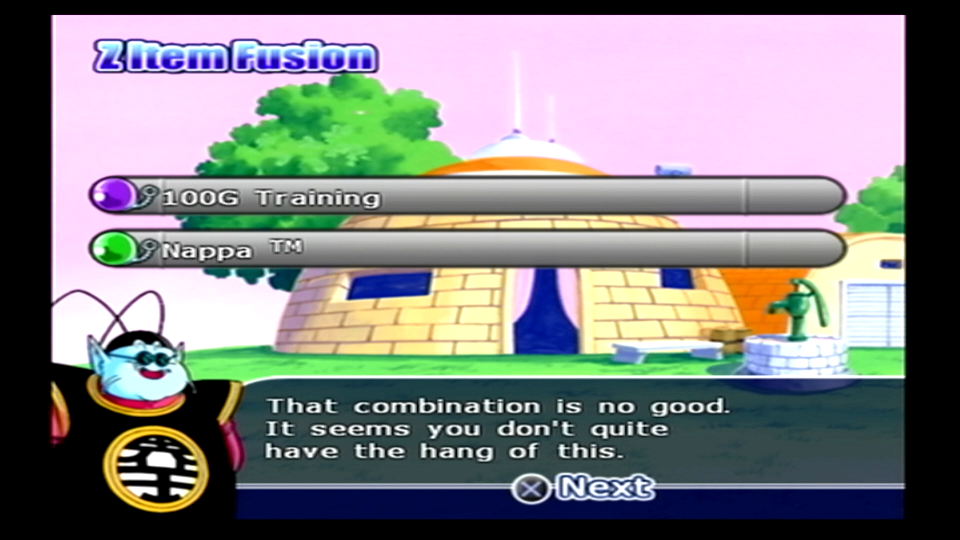
Fusion! (Credit: Akira Toriyama, Spike)
Evolution Z returns, along with potara fusion. As you play through the games you earn potara that are just for fusing and can create new potara and characters by combining two together and using up a fusion potara. You can buy these in the shop. In this game, most of the fusions were pretty easy to figure out, with the components being earned at the same time or close to each other in Story mode. Some of them were a bit more obscure, and other fusions were unneeded since you could obtain the potaras in other ways.
This mode is also where you can equip your characters with potara. (This can also be done in various modes before battles.) Your various stats are affected by potara that you equip. Attack, Defense, Blast 2, etc. These go from +1 to +19, with each category of stat maxing out at 20. (Your base for each stat is 1.) When you use custom characters in Dragon Adventure and Ultimate Battle Z modes while you have potara equipped, you gain experience points to level them up permanently. Higher difficulties give you more experience. As you can imagine, much of the potara list ends up being stat potara.
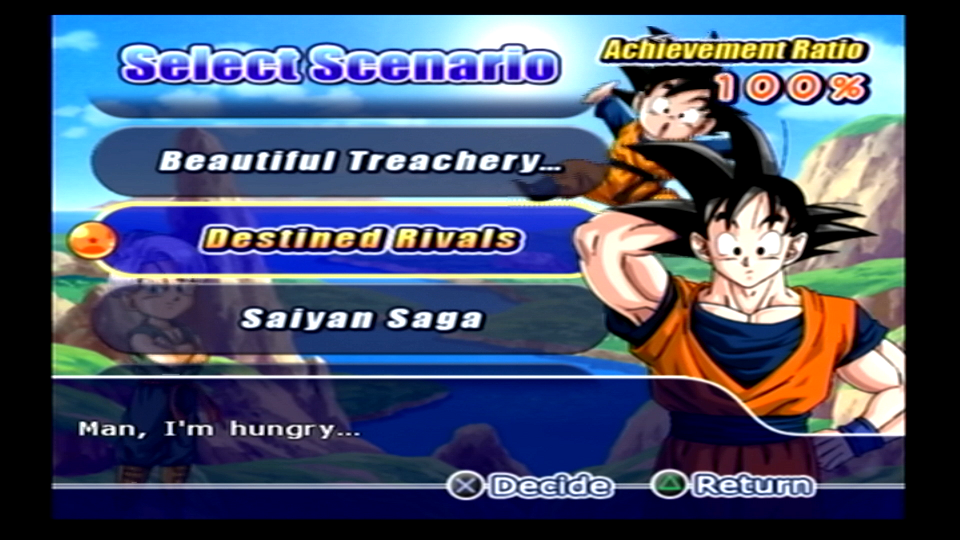
Story mode! (Credit: Akira Toriyama, Spike)
Dragon Adventure is the story mode in this game. As you complete each scenario, you earn new scenarios to play through. Some are available only when doing certain things. (Like defeating Gohan as Goten in the Buu Saga.) This one also allows you to play through several of the movies. While there are still battles where the objective is to survive for a specific amount of time, you can still defeat the opponent and have that count as a win. Most battle objectives are just “defeat the enemy”.
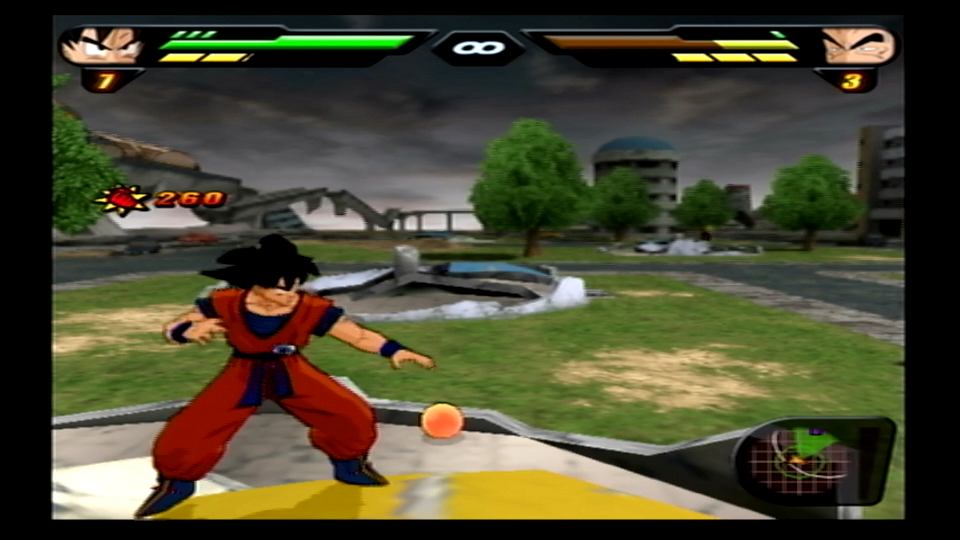
Dragon Ball! (Credit: Akira Toriyama, Spike)
Dragon Adventure is much like Dragon Universe from Budokai 3. This game’s story mode is framed with a world map and your character flies around, entering lit up locations. There are battles and sometimes items in the locations. Completing the key location advances the story by a chapter. There are two different maps— Goku’s world and Namek.
For me, the best part of all these games (aside from seeing the new characters) is story mode. I really did like Dragon Adventure, but some of it seemed padded out while other parts were rushed through. (Especially the movies and GT.)
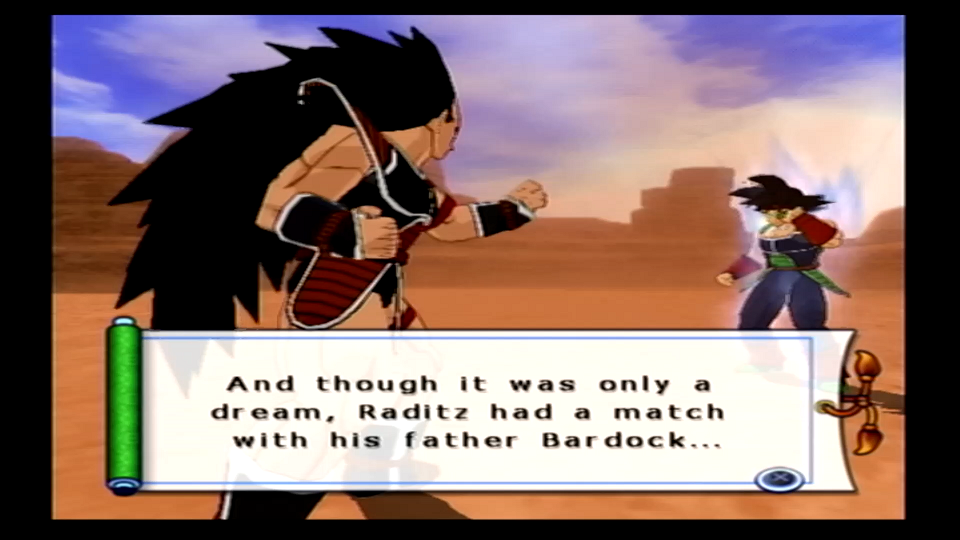
Raditz battles his dad. (Credit: Akira Toriyama, Spike)
As always, the story mode contains a few what if scenarios. The first one imagines Raditz as getting amnesia and briefly joining Goku and friends. When he regains his memory, he betrays them, but still defeats Vegeta and Nappa to save Earth due to his brother’s influence.
The second scenario has Zarbon betray Frieza to use the Dragon Balls for eternal beauty. But then he learns beauty means nothing if you’re dead. The third one is just a retelling of part of the Buu saga, focusing on Vegeta’s obsession with fighting Goku. The what if scenarios this time around weren’t very substantial, but any deviation from the standard story is a nice novelty.
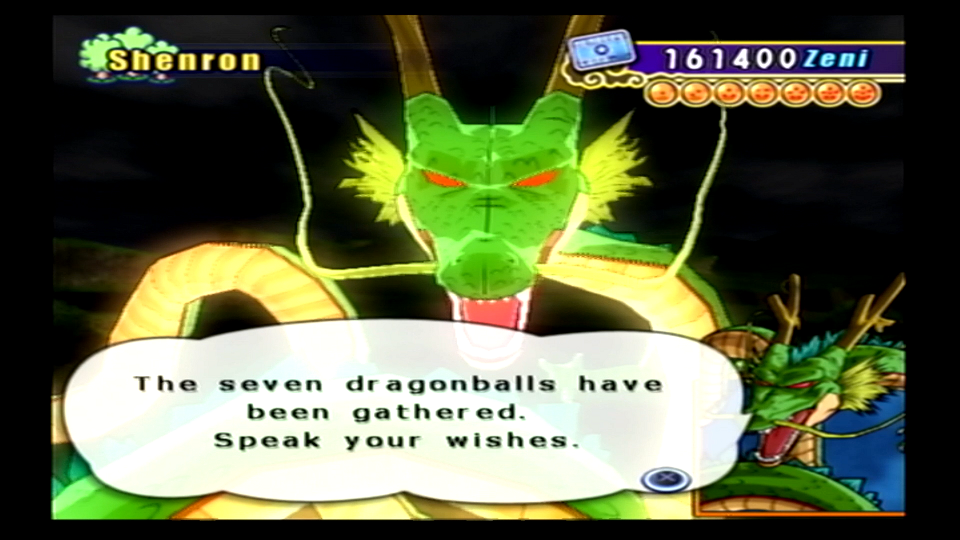
Shenron. (Credit: Akira Toriyama, Spike)
As always there are Dragon Balls to collect. These are all in Dragon Adventure mode, hidden in the scenery or lying around in locations. It’s possible to get all the Dragon Balls in the first four levels without any fighting, so grinding for them is way easier in this game. Once you get all seven Dragon Balls, a new location appears in the center of the map, allowing you to summon Shenron for a set of random wishes you could choose from.
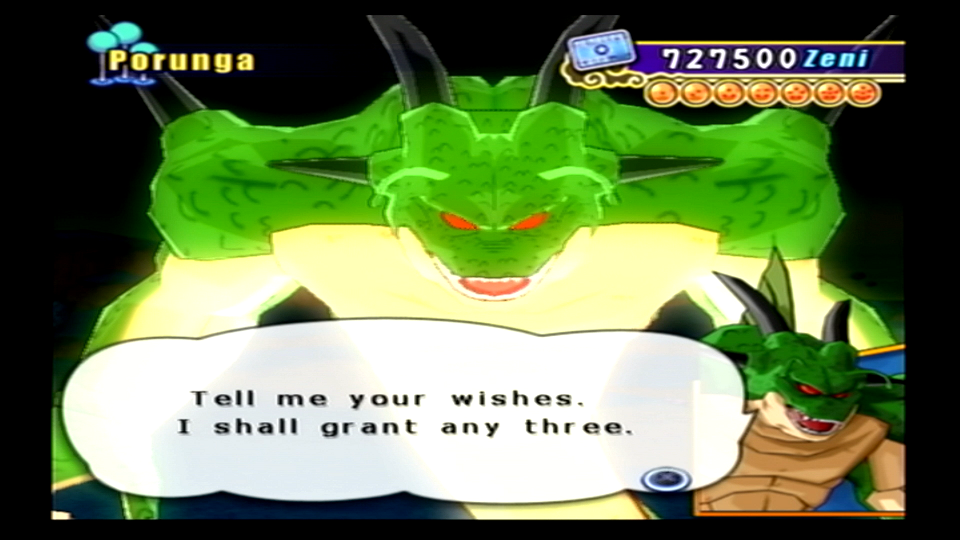
Porunga. (Credit: Akira Toriyama, Spike)
If you summon the dragon on Namek, regardless of where you gathered the Dragon Balls, you get Porunga instead with three wishes. The items available with Porunga seem more common than the ones Shenron gives you. Some of the items are wish-exclusive, but not many.
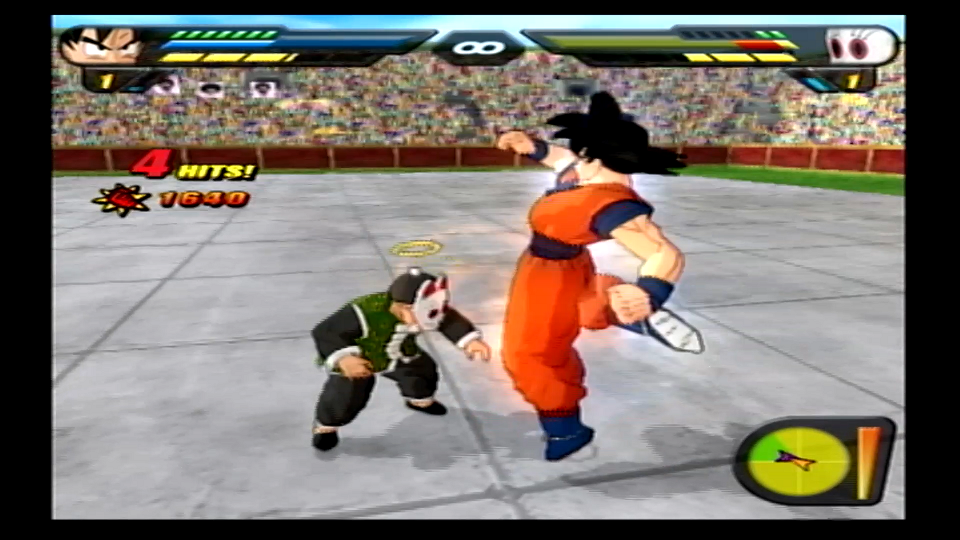
Goku’s about to kick his grampa. (Credit: Akira Toriyama, Spike)
Dragon Tournament is the new name for the World Tournament. (Lame. It’s just the same Budokai as always. Why did it need a dragon-themed name?) The Tournaments are in three modes: World Tournament, Cell Games, and Mister Money Tournament. There are four levels to each and you have to complete all three Tournaments to unlock the next highest level for each one. Winning earns you zeni and potara.
Completion on this game took a particularly long amount of time… I mean, the previous four games had a lot of grinding, but somehow it felt worse on this one. There was the usual hunting for Dragon Balls and exiting and reloading to get the right wishes to come up. Some of the potara were really tucked away in obscure places so when I was around 95% complete I had to look up some of the locations. You had to visit specific locations in specific chapters of certain scenarios just to get one potara you couldn’t find anywhere else. As mentioned, there were so many Ultimate Battle towers to complete. The worst part of the whole process was leveling up the stat potara. I learned a trick late in my playthrough where you can go to the Dragon Tag challenges in Ultimate battle and select the same character for both fighters to double your experience, but it still took a lot of those to max out my stats.
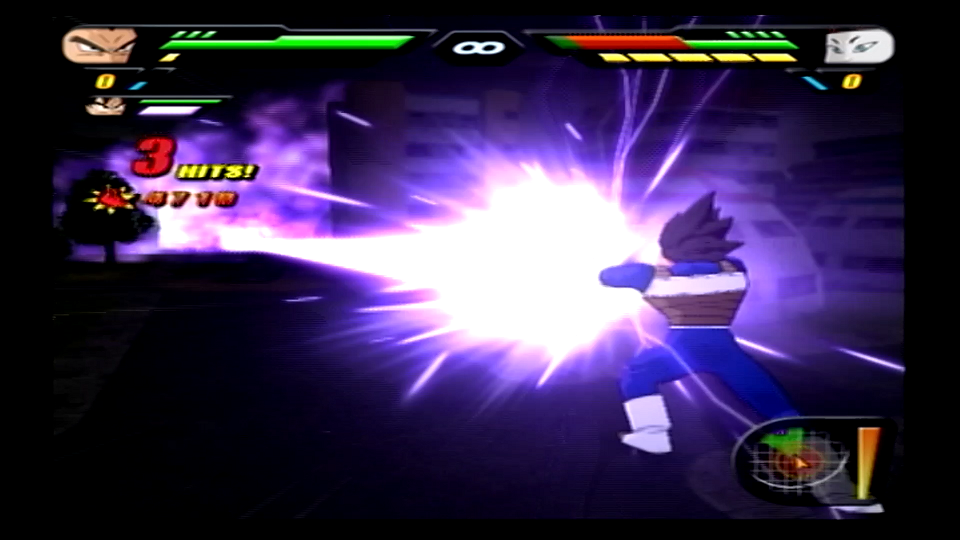
Is Vegeta ever not showing off? (Credit: Akira Toriyama, Spike)
Upsides: As I mentioned, the controls were improved over the previous installment. I loved the transformation mechanics in this game. They were far improved from any of the previous games, making the transformations an important part of some of the characters. And not having to equip them as potara added to the utility of the potara system. (Since you wouldn’t be taking up slots with transformations.) I liked the tag team mechanic. It was nice being able to whittle down the tougher fighters with weaker characters before throwing in my heavy hitters. The battles are more feverish and intense, less frustrating then the previous game. Adding Porunga as an option was great. The casual nature of the game once I learned the controls made for more enjoyable and relaxing play sessions.
Downsides: Although the controls were improved, there were still a lot of options I didn’t use. The fights usually devolved to me spamming my special moves over and over, which got repetitive and tedious. The Namek map only had one stage, so the scenarios that took place there all blurred together. While this game continued to incorporate the dragon balls, dragon summoning, and zeni, they seemed less important. Most of the dragon wishes I could get elsewhere, and I completed this game with over 4 million zeni banked and nothing to spend it on. (I also summoned the dragons repeatedly before realizing I had wished for everything I needed from them.) The pacing in Dragon Adventure was up and down, with the fights becoming tedious at times with less variety to the objectives as the previous game. This game had a lot of little annoyances, like Goku constantly babbling as you select your options in Dragon Adventure. (And if you leave the game running he just keeps talking, cycling through the same two or three dialogue choices.) Every time you go into Tournament mode, the game tries to load a second memory card even if you don’t have one in the console. The crowd sound effect in the Budokai stage was turned up too high and sounded like static. Little things, but the annoyances add up.
All that considered, I give this one a rating of 4 out of 7 Dragon Balls. I had to really contemplate that rating for a bit. I knew it needed a higher score than the previous game because it did improve on many of the problems. But there are still so many combat mechanics that don’t work properly or are prohibitively difficult to pull off reliably in the heat of battle. Dodging is too difficult and unreliable. And most of my battles ended up going the same, spamming Blast 2 moves, so that got repetitive. The challenge could be pretty high and there was a drastic difference between the three difficulty levels. On the plus sides are the simplified combat and added options as well as the additional characters and return of transformations. The expanded story mode and covering more of the series/movies was welcome. All of these factors gave it that extra Dragon Ball and made for a better experience than Part 1. So I feel while the Tenkaichi series is improving, it’s still a bit middle of the road. It’s done well, but could have been better. And will be, I’m sure!
How well does it translate the spirit and feel of Dragon Ball? The battles feel much more immersive in this one. At the higher difficulty levels the fights go fast and the opponents are more unforgiving, making you act more on instinct and skill than anything. The transformations felt more significant and I liked the stat potara and the leveling system. The experience system made it so that fighting battles actually makes your fighters stronger, faster, and powered up their moves depending on how you equip them. The fast and frantic battles, the facing of opponents much stronger and faster than you, and the desperation of throwing everything you have against your foe are all very much Dragon Ball. So far, out of the games I’ve covered, this one felt the most like actually being in Dragon Ball.
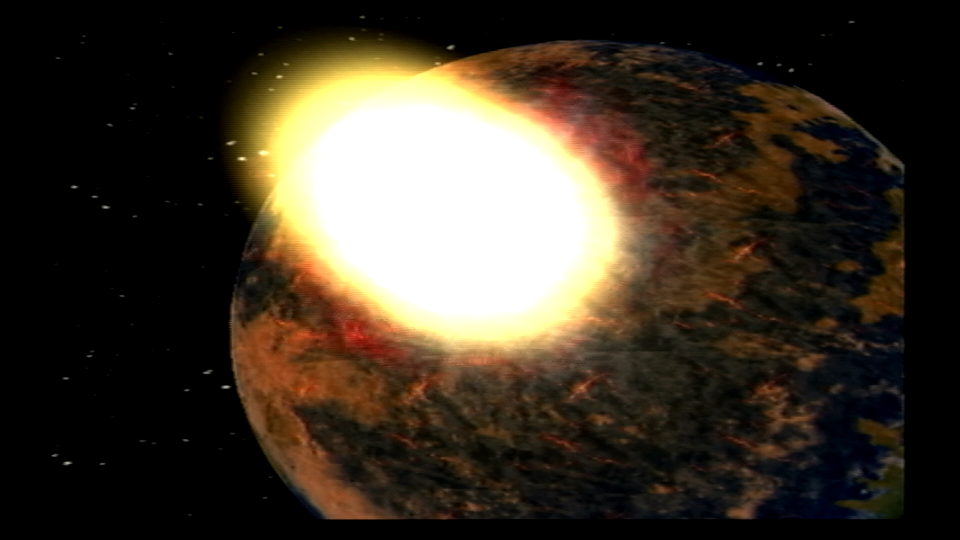
Whoops. Did I do that? (Credit: Akira Toriyama, Spike)
Also I should probably mention that I repeatedly blew up the world while playing this game. Oops. Well, that’s what the Dragon Balls are for, right? Shenron’s got to be tired of fixing Earth.
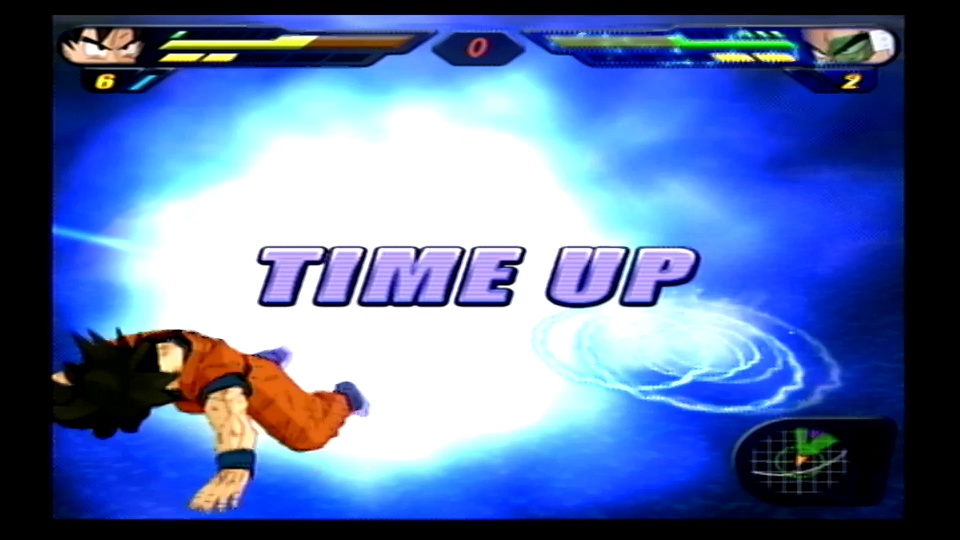
And that’s all! (Credit: Akira Toriyama, Spike)
And that’s the next two games in our epic Dragon Ball journey! As a little birthday present to myself, I bought Dragon Ball Sparking Zero with all the DLC on a Steam sale and started playing it. It’s sooo good. It will be quite a while before I get to that in this series of posts, but that’s fine because it’s a massive game. It will take me years to 100% it. There are over 200 characters, a huge story mode, and tons of content to unlock.
The next post will cover Budokai Tenkaichi 3 and two of the side games. In the meantime, I’ll be back with other video game goodness. I appreciate you all. Until we see each other again, keep fighting!
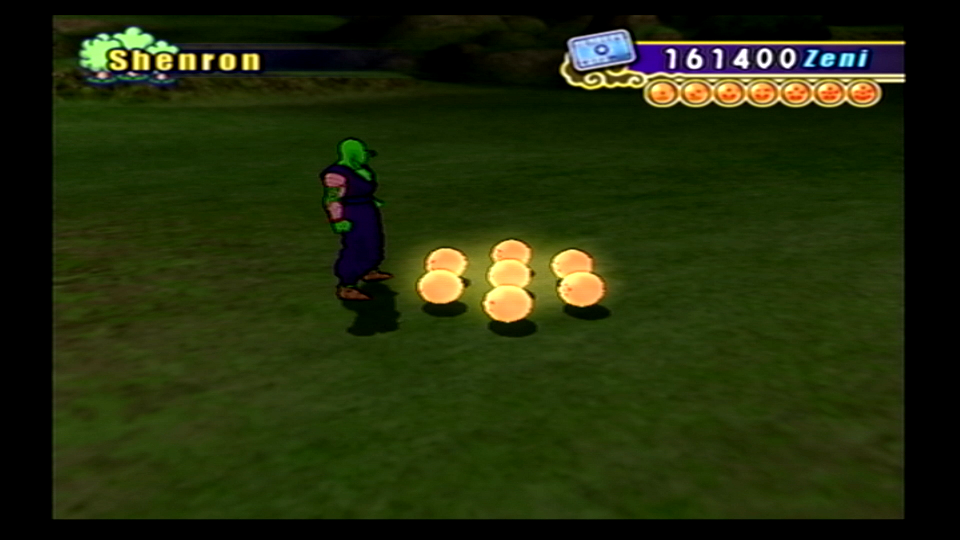
Piccolo is about to wish for some cool anime hair. (Credit: Akira Toriyama, Spike)